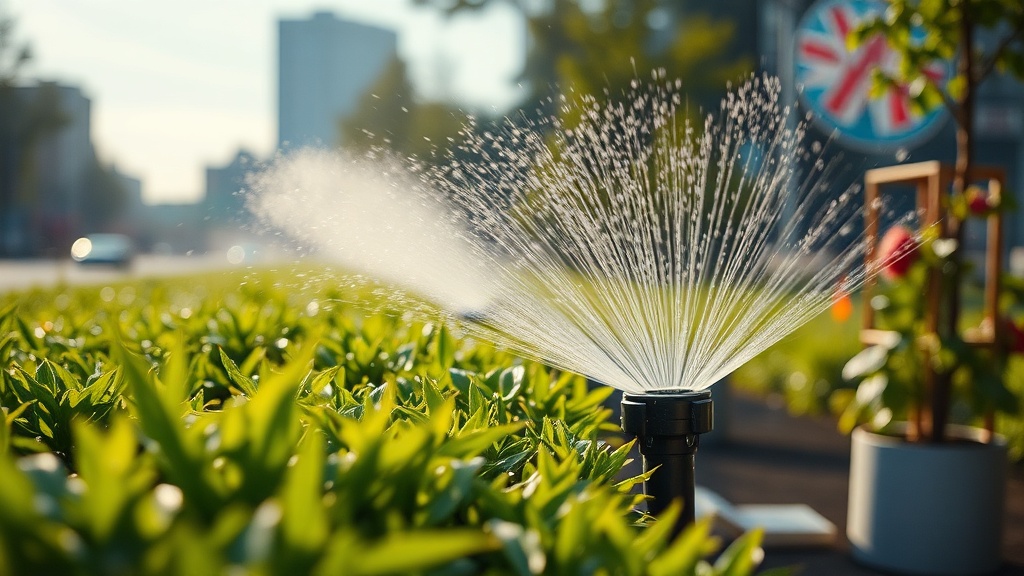
Precision Watering Methods for Drier Urban Summers

Most gardeners believe that a yellowing leaf is a desperate cry for more water—but that’s often the exact opposite of reality. In many cases, you’re looking at root rot caused by over-saturation or a plant that’s simply shut down because it’s being hit with cold water from a hose in the middle of a 90-degree afternoon. This guide covers the shift from wasteful overhead spraying to targeted root-zone delivery systems. It matters because Detroit summers are becoming increasingly unpredictable (think long dry spells followed by sudden downpours) and our aging infrastructure can’t afford for us to be dumping gallons of treated city water onto the sidewalk by accident. Precision watering isn’t just about saving money; it’s about growing plants that are actually resilient enough to survive a week without you.
The Problem with the Standard Garden Hose
Let’s be honest: standing in the garden with a hose and a beer for twenty minutes isn’t actually watering your plants. It’s a nice way to decompress, but it’s doing almost nothing for the root systems. Most of that water evaporates before it even hits the soil—especially if you’re doing it during the day. If it does hit the soil, it usually just wets the top half-inch. This encourages roots to stay near the surface where they’re easily scorched by the sun (a classic mistake). To get water where it counts, you have to bypass the foliage entirely. Wet leaves are just an invitation for powdery mildew and other fungal issues that will wreck your squash and roses faster than any heatwave could.
Standard sprinklers are even worse. They’re designed for wide-open spaces and turf grass, not the varied heights and needs of a perennial bed. When you use an oscillating sprinkler in a tight urban garden, you’re essentially watering the fence, the neighbor’s driveway, and the underside of your porch more than the actual root balls. We need to move toward systems that deliver water slowly, deeply, and directly to the base of the plant.
Which irrigation system saves the most water?
If you want the most bang for your buck, drip irrigation is the undisputed king. Unlike a sprinkler that tosses water into the air, a drip system uses a network of tubes with small emitters that release water at a literal drip—usually one or two gallons per hour. This allows the soil to soak up the moisture at its own pace. It prevents the runoff you see when you blast a garden bed with a high-pressure nozzle. When the water moves slowly, it travels vertically into the ground rather than horizontally across the surface. This deep soaking is what forces roots to grow downward, making the plant much more stable and drought-tolerant over time.
Soaker hoses are the "lite" version of this. They’re porous hoses that leak water along their entire length. They’re cheaper and easier to set up than a full drip kit, but they have a major flaw: the pressure isn't even. The beginning of the hose gets a lot more water than the end. If you’re going this route, keep your runs short—no more than 25 feet—and always bury them under a thick layer of mulch. If you leave a soaker hose exposed to the sun, the rubber will degrade within a season and you’ll lose half your water to evaporation anyway. You can find more detailed technical specs on water efficiency from the