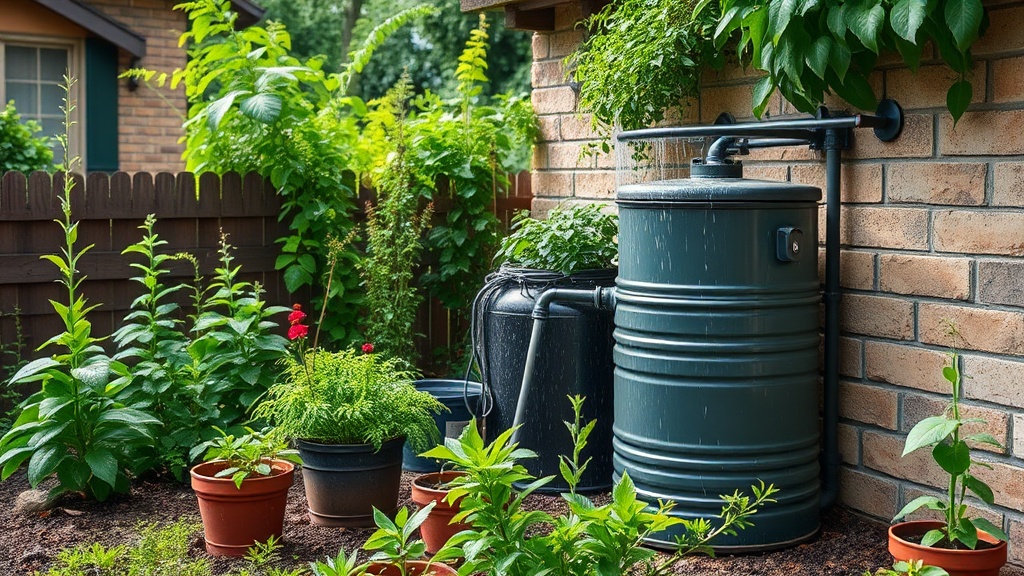
Rainwater Harvesting Systems: A Complete Guide to Sustainable Garden Irrigation

What This Guide Covers (and Why Your Water Bill Will Thank You)
Rainwater harvesting transforms free rainfall into a reliable irrigation source for gardens, lawns, and landscaping. This guide breaks down everything from barrel selection and downspout connections to filtration systems and legal considerations—giving you the practical knowledge to slash municipal water usage while keeping plants thriving through dry spells. Whether you're tending a small urban plot in Detroit or managing acreage in the suburbs, collecting rain reduces runoff, lowers utility costs, and provides plants with chlorine-free water they actually prefer.
How Much Rain Can You Actually Collect From Your Roof?
For every inch of rainfall on a 1,000-square-foot roof, you can harvest approximately 600 gallons of water. That means a modest Detroit home with 1,500 square feet of catchment area could collect 900 gallons from a single 1.5-inch summer storm.
Here's the math that matters: multiply your roof's footprint (not its slope area) by 0.623 to get gallons per inch of rain. A 2,000-square-foot roof yields roughly 1,246 gallons per inch. In Michigan's climate—where annual precipitation averages 30-35 inches—that's 37,000+ gallons potentially captured each year.
The catch? You'll never catch it all. First-flush diverters waste the initial dirty runoff. Overflow during heavy storms sends excess down the drain. And evaporation from open containers steals percentage points. Realistically, expect 70-80% efficiency with a well-designed system.
Storage becomes the limiting factor fast. A 55-gallon barrel fills in minutes during a downpour. For serious gardeners, multiple barrels or a cistern system makes more sense than watching precious rain overflow onto the driveway.
What Are the Best Rainwater Collection Systems for Home Gardens?
The right system depends on your garden size, budget, and how handy you are with tools—ranging from sub-$100 barrel setups to professional cistern installations costing several thousand.
| System Type | Capacity | Best For | Price Range |
|---|---|---|---|
| Plastic rain barrel | 50-80 gallons | Small patios, container gardens | $80-$150 |
| Wooden whiskey barrel | 40-60 gallons | Decorative installations | $150-$300 |
| Stackable slim tanks | 100-300 gallons | Side yards, narrow spaces | $200-$600 |
| Underground cistern | 500-5,000+ gallons | Large properties, whole-house use | $2,000-$10,000+ |
| IBC tote system | 275-330 gallons | Budget-conscious homesteaders | $100-$400 |
Entry-level gardeners should start with something like the RFC Rain Barrel ($129 at Home Depot) or the Good Ideas Impressions Nantucket ($179)—both include mosquito screens and overflow ports. These connect directly to downspouts with included diverter kits.
For mid-range capacity, the Bushman Slimline Rain Tank holds 260 gallons while occupying just 25 inches of width—perfect for tight Detroit side lots. At around $450, it's pricier than barrels but eliminates the chaining hassle.
That said, don't dismiss IBC totes. Food-grade 275-gallon containers (often available for $75-$150 from local beverage distributors) offer serious capacity at barrel-level prices. You'll need to add your own spigot and screen, but the value is hard to beat. Worth noting: always verify the tote previously held food products, not chemicals.
Is It Legal to Collect Rainwater Where You Live?
In most U.S. states—including Michigan—rainwater harvesting is completely legal and often encouraged through rebate programs. However, Colorado and Utah maintain strict regulations limiting collection amounts, while some Western states require permits for larger cistern systems.
Michigan actually incentivizes conservation. The Michigan Department of Environment, Great Lakes, and Energy promotes rain barrels as stormwater management tools, and several Detroit-area municipalities offer subsidized barrels through conservation districts. Check with your local conservation district—many sell barrels at cost ($40-$60) during spring programs.
Homeowners association rules can be trickier than state law. Some HOAs restrict visible barrels or require specific colors. Review covenants before installation, or opt for slimline tanks that tuck beside the house out of sight.
Water rights become murkier when scaling up. Large cisterns (5,000+ gallons) in drought-prone regions sometimes trigger scrutiny. The EPA's WaterSense program maintains guidelines, but local plumbing codes govern permanent installations—especially those connecting to household plumbing for toilet flushing or laundry.
How Do You Keep Harvested Rainwater Clean and Usable?
Clean rainwater starts at the roof. Asphalt shingles shed granules and contaminants. Metal roofing delivers the cleanest collection surface. Gutters filled with leaves and pollen turn rain into compost tea—fine for ornamentals, problematic for edibles.
Filtration happens in stages. Screens on gutters block leaves and twigs. First-flush diverters (like the Oatey Mystic Rainwater Diverter, $45) discard the initial dirty runoff—typically the first 10 gallons per downspout—before sending cleaner water to storage. This matters because roof contaminants concentrate in that first wash.
Inside the barrel, darkness prevents algae. That's why opaque containers beat clear ones. Mosquito screens (fine mesh, 1/16 inch) are non-negotiable—standing water breeds insects within days.
Here's the thing about purification: rainwater for irrigation doesn't need to be potable. Plants handle microbes and organic matter just fine. But if you're considering household uses, UV sterilizers and cartridge filtration (like the Sawyer PointONE system) become necessary. Most gardeners can skip this entirely.
Connecting Your System to the Garden
Gravity is your friend—until it isn't. A barrel on the ground delivers minimal pressure, producing a trickle from a hose. Raising the barrel 12-18 inches on cinder blocks or a purpose-built stand creates enough head pressure for soaker hoses and gentle watering.
For serious pressure, submersible pumps work wonders. The Rule 25D Submersible Pump ($85) moves 500 gallons per hour—plenty for sprinkler attachments or long hose runs. Solar-powered options (like the ECO-WORTHY 12V Solar Water Pump, $65) eliminate extension cords but deliver lower flow rates.
Drip irrigation pairs beautifully with rain barrels. Low-pressure drip systems (under 15 PSI) operate directly from improved barrels without pumps. The Rain Bird Drip Irrigation Kit ($35) includes pressure regulators that adapt to barrel gravity flow.
Distribution gets creative with multiple barrels. Link barrels in series with hose connectors, or place dedicated barrels near different garden zones. One near the vegetable patch, another by the flower beds—strategic placement eliminates dragging hoses across the yard.
Maintenance That Actually Matters
Winter in Detroit means freezing. Drain barrels completely before the first hard frost—typically late October—or they'll crack. Flip them upside down, or install a drain valve at the lowest point. Some gardeners move portable barrels into garages or sheds.
Spring cleaning is simple but necessary. Scrub algae from barrel interiors with a long brush. Check screens for tears (squirrels love chewing them). Clear first-flush diverters of sediment buildup. The whole routine takes 30 minutes annually.
Gutter maintenance directly impacts water quality. Clean gutters twice yearly—more often if you're under maple or oak trees. Gutter guards reduce but don't eliminate this chore; fine pollen and roof grit still accumulate.
Seasonal Task Checklist
- Spring: Inspect barrels for cracks, reinstall diverter systems, test pumps, clean screens
- Summer: Monitor overflow during storms, check mosquito screens monthly, clean filters after pollen season
- Fall: Clear gutters before leaf drop peaks, drain and store portable barrels, blow out irrigation lines
- Winter: Store hoses indoors, verify barrels are empty, protect spigots from ice damage
Real-World Costs and Payback
A basic two-barrel setup ($200-$300) typically pays for itself in 2-3 years through water bill reductions—faster if your municipality charges sewer fees based on water usage (most do). Detroit Water and Sewerage Department customers pay roughly $9 per 1,000 gallons, meaning each inch of rain on a 1,000-square-foot roof represents $5.40 worth of free water.
Larger investments take longer. A $3,000 underground cistern with professional installation might need 10+ years to break even purely on utility savings. The value proposition shifts when you factor in stormwater credits (some cities rebate stormwater fees for retention systems) and space protection during drought restrictions.
There's also the intangible: independence. When summer watering restrictions hit and neighbors watch lawns brown, rain harvesters keep watering. That security has real worth, even if it's harder to calculate.
"After installing three 275-gallon IBC totes connected to my garage roof, I haven't touched a municipal spigot for garden watering in four years. The tomatoes don't care where the water came from—but my summer water bills dropped from $180 to $40." — Community gardener, Detroit's Brightmoor neighborhood
Start small if you're hesitant. One barrel teaches you the rhythm of collection and use. Expand when you understand your patterns—most gardeners eventually wish they'd built bigger from the start.