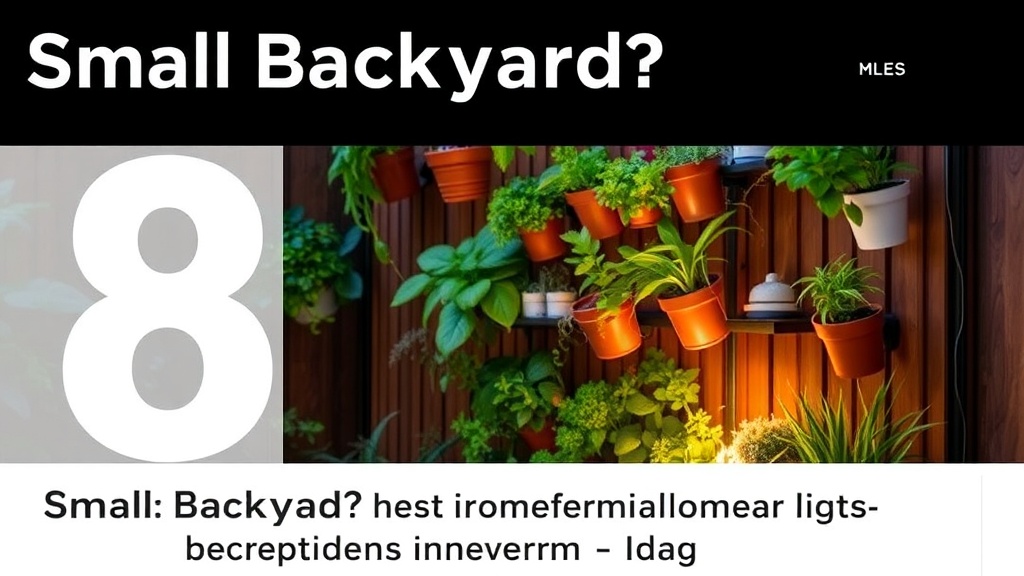
Small Backyard? These 8 Vertical Gardening Ideas Double Your Growing Space

You step outside your back door with a cup of coffee, eyeing that postage-stamp patio or narrow side yard. There's barely room for a chair—let alone the vegetable patch you've been dreaming about. But here's the thing: you're not actually limited by square footage. You're limited by thinking in two dimensions.
Vertical gardening flips the script on small-space constraints. Instead of spreading out, you grow up—along fences, against walls, suspended from overhead beams. A 4x4 foot area can yield as much produce as a traditional 20-foot row when you stack your growing space. And it's not just about efficiency—vertical gardens create visual interest, improve air circulation around plants, and make harvesting easier on your back.
Whether you're working with a tiny urban balcony or a modest suburban lot, these eight vertical gardening approaches will help you squeeze more green into less ground.
What Can You Grow in a Vertical Garden?
Before we dig into structures, let's talk plants. Not everything wants to climb or hang. The best candidates fall into three categories: natural climbers (beans, peas, cucumbers, indeterminate tomatoes), trailing plants (strawberries, nasturtiums, certain herbs), and compact growers (lettuce, spinach, radishes) that thrive in shallow pockets.
Root vegetables? Skip them for vertical setups—they need depth you can't easily provide going upward. But leafy greens, herbs, and fruiting vines? They'll reward your vertical thinking with bumper crops from minimal footprints.
How Do Living Walls Work for Small Spaces?
Living walls—also called green walls or vertical planters—are the showstoppers of upward gardening. These systems attach directly to existing structures, transforming bare fences or house walls into lush tapestries of vegetation.
Commercial living wall systems use modular pockets or felt panels with integrated irrigation, but DIY versions work just as well for home gardeners. A simple pallet garden—secured firmly to a wall and lined with landscape fabric—creates instant rows of planting pockets. Just lean it at a slight angle rather than hanging fully vertical; this prevents soil from compacting and helps with drainage.
For something more polished, pocket planters made from recycled felt or canvas shoe organizers attach easily to walls with basic hooks. Herbs and salad greens love these shallow containers. Mount several at staggered heights and you've got a kitchen garden that takes up zero ground space.
The key consideration is weight. Wet soil is heavy—about 100 pounds per cubic foot. Always anchor living walls to studs, not just drywall or siding. And include a moisture barrier between the planter and your wall to prevent water damage.
Can You Build a Vertical Garden with Repurposed Materials?
Some of the most charming vertical gardens start life as something else entirely. Old wooden ladders lean against walls to become tiered plant stands. Vintage gutters—properly drilled for drainage—screw onto fence rails as long, narrow planters perfect for shallow-rooted greens.
Repurposed wooden shutters, mounted horizontally, create slatted shelves where potted herbs nestle into the louvers. Old step ladders transform into pyramid-shaped growing towers with pots arranged on each rung. Even an antique bicycle, its basket and frame planted with trailing flowers, becomes whimsical garden sculpture that happens to grow food.
The sustainability angle here is obvious—you're keeping materials out of landfills while creating something functional. But there's also an aesthetic benefit. Weathered wood and patinated metal bring character that brand-new cedar planters can't match.
When sourcing materials, avoid pressure-treated lumber for edible plantings (the chemicals can leach into soil). Old cedar fence boards, barn wood, or untreated pine work beautifully and safely.
What's the Best Trellis Design for Heavy Crops?
Not all trellises are created equal. That decorative metal piece from the garden center might support sweet peas, but it'll buckle under the weight of mature pumpkins or winter squash.
For heavy crops, you need serious structure. Cattle panels—those rigid wire grids used for livestock fencing—are the gold standard among serious gardeners. At 16 feet long and 50 inches tall, one panel creates an arched tunnel or sturdy flat wall that can support hundreds of pounds of produce. Secure the base with metal T-posts driven deep into the ground.
Cucumbers, pole beans, and smaller melons thrive on cattle panel trellises. For truly massive crops like giant pumpkins, create slings from old t-shirts or pantyhose to cradle the fruit and transfer weight to the trellis rather than letting vines bear the full load.
Architectural trellises built from cedar posts and galvanized wire offer another durable option. Space vertical wires 6 inches apart, anchored at top and bottom, and train tomatoes or beans to spiral up them. These structures last decades and look sharp enough for front-yard vegetable gardens.
How Do Hanging Gardens Maximize Overhead Space?
When ground space and wall space are both spoken for, look up—literally. Hanging baskets suspended from beams, pergolas, or dedicated stands add a third dimension to your growing area.
Standard nursery baskets work fine for flowers, but vegetables need more soil volume. Look for baskets at least 12 inches wide and deep—anything smaller dries out too quickly and limits root development. Self-watering inserts or coco coir liners help maintain consistent moisture.
Here's a trick most gardeners miss: upside-down planters. Cherry tomatoes, peppers, and strawberries actually perform well when grown downward through holes in container bottoms. The theory is controversial among horticulturists—some insist roots don't care about orientation—but field tests show comparable yields with less staking and fewer soil-borne diseases.
For sturdy overhead installation, use eye bolts rated for at least double your expected load. A saturated 12-inch basket weighs 20-25 pounds, and you don't want it crashing down during a dinner party.
What About Tiered Planters and Green Stairs?
Sometimes the best vertical solution isn't hanging on a wall but stacked like stairs. Tiered planters—whether store-bought pyramid stacks or DIY cedar stair-step boxes—multiply growing area while keeping everything accessible.
The classic strawberry pyramid exemplifies this approach: four stacked square boxes, each smaller than the one below, creating planting ledges on all sides. One 4-foot pyramid provides roughly 30 square feet of growing surface in a 4x4 footprint. Plant strawberries on the sunny sides, lettuce or herbs on the shadier northern exposures.
Stair-step designs work equally well against walls or as freestanding dividers that define outdoor rooms. Just ensure each tier has adequate soil depth—6 inches minimum for greens, 12+ inches for tomatoes or peppers—and that water can drain from upper levels without drowning lower plantings.
Rotating these planters quarterly prevents the uneven growth that happens when one side gets more sun. If rotation isn't practical, plant accordingly—heat lovers on the south face, shade-tolerant herbs like parsley and cilantro on the north.
How Can You Build a Simple Hydroponic Tower?
Soil-free vertical systems take efficiency to another level. Hydroponic towers—vertical columns where water rich with nutrients cascades past plant roots—grow lettuce, herbs, and strawberries at densities impossible in soil.
Commercial towers like Tower Garden or ZipGrow towers use pumps to circulate water through vertical columns. Plants grow in small cups inserted into the tower sides, roots dangling into the nutrient stream. These systems use 90% less water than conventional gardens and produce faster growth since plants don't expend energy searching for nutrients.
DIY versions abound online—PVC pipe towers with holes drilled for net pots, or recycled plastic bottle systems where each bottle's bottom becomes the next plant's reservoir. They require more attention than soil gardens (pumps can fail, nutrient solutions need monitoring), but the space efficiency is unmatched. A single 5-foot tower can host 20-30 lettuce plants in less than 2 square feet of floor space.
What Are the Best Plants for Beginner Vertical Gardeners?
If you're new to growing upward, start with forgiving crops that practically grow themselves. These five never fail:
- Sugar snap peas: Natural climbers that grasp any support with curly tendrils. Plant in early spring or fall; they prefer cool weather and finish before summer heat arrives.
- Cherry tomatoes: Indeterminate varieties like 'Sun Gold' or 'Sweet 100' vine enthusiastically up trellises. Prune suckers (side shoots) monthly to keep them manageable.
- Pole beans: Unlike bush beans that sprawl, pole beans spiral gracefully upward. 'Kentucky Wonder' and 'Scarlet Runner' combine beauty with productivity.
- Strawberries: Trailing varieties planted in hanging baskets or pocket walls drape attractively while keeping fruit clean and slug-free.
- Leaf lettuce: Shallow roots make it perfect for vertical pockets. Cut-and-come-again harvesting provides salads for weeks from a single planting.
Avoid corn, root vegetables, and sprawling squash for your first vertical experiments. Once you've mastered the basics, branch into more ambitious crops.
How Do You Water a Vertical Garden Without Making a Mess?
Here's the dirty secret of vertical gardening: water drains down. What starts as a gentle shower at the top becomes a torrent by the bottom—unless you plan for it.
Drip irrigation solves this elegantly. Small emitters at each planting level deliver consistent moisture without oversaturating lower plants. For pocket walls, micro-sprayers tucked between plants provide even coverage. Battery-powered timers let you automate the whole system.
Without irrigation, water by hand slowly—small amounts, multiple passes. Let each application soak in before adding more. And always include saucers or drainage mats beneath wall-mounted gardens to protect surfaces below.
Consider plant placement carefully: moisture lovers (celery, spinach, mint) occupy bottom positions where water accumulates. Drought-tolerant herbs (thyme, rosemary, sage) claim top spots that dry fastest.
Vertical gardening isn't a trend—it's a practical response to real space constraints that growing numbers of homeowners face. Start with one wall, one trellis, or one hanging basket. Learn how plants respond to their upward orientation. Then expand, layer by layer, until that tiny backyard feels like a abundant oasis reaching toward the sky.