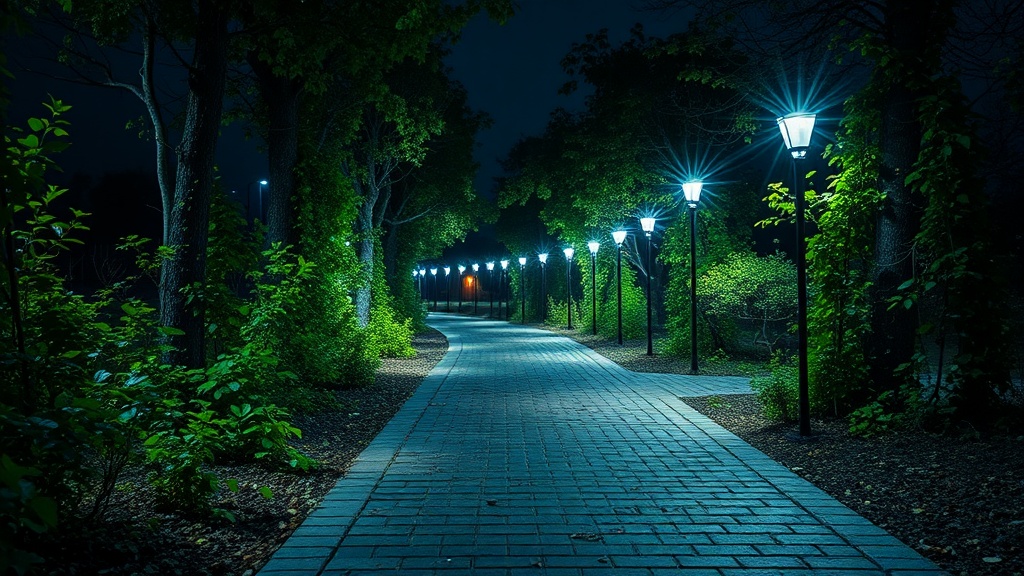
Solar Powered Pathways for Sustainable Nighttime Illumination

A single, warm amber light glows against a dark stone path, marking the edge of a garden bed where the shadows of ferns sway in the breeze. This isn't a harsh floodlight or a glaring porch lamp; it’s a soft, intentional glow that guides your footsteps without disturbing the natural rhythm of the night. Solar-powered pathway lighting offers a way to light up your outdoor walkways using only the sun's energy, providing a sustainable alternative to traditional wired electrical systems. We're looking at how to select, install, and maintain these lights to ensure your garden remains both beautiful and eco-friendly after the sun goes down.
Most people think of solar lights as cheap, plastic stakes that die after one season. That's a fair criticism of the low-end stuff you find at big-box stores. But when you look at high-quality photovoltaic technology, the results are actually quite impressive. You're moving away from digging trenches for wires and toward a system that works with your garden's existing environment.
How Much Does Solar Pathway Lighting Cost?
The cost of solar pathway lighting typically ranges from $20 for basic decorative lights to over $200 per unit for high-end, professional-grade-style fixtures. If you're just looking to light a small walkway near your patio, a set of five decent lights from a brand like Lutron or Ring might run you about $100 to $150. However, if you want heavy-duty copper or brass fixtures that can withstand a Detroit winter, expect to pay a premium.
It’s helpful to think about the long-term savings. While a wired electrical installation requires an electrician and significant labor, solar is largely a DIY project. You're trading an upfront investment in hardware for a significant reduction in monthly utility bills and installation complexity. It’s a simple trade-off—pay more now for quality, or pay less now and replace them every year.
Here is a breakdown of what you can expect to spend based on the quality tier:
| Tier | Typical Price per Unit | Materials | Expected Lifespan |
|---|---|---|---|
| Budget | $5 - $15 | Plastic/ABS | 1 Season |
| Mid-Range | $30 - $60 | Stainless Steel/Aluminum | 2-3 Years |
| Premium | $100+ | Solid Brass/Copper | 5+ Years |
Don't forget to consider the battery life. A high-quality light might have a higher initial price, but the internal lithium-ion battery will hold a charge much longer than the cheap alkaline versions found in budget models.
What Are the Best Materials for Outdoor Solar Lights?
The best materials for outdoor solar lights are weather-resistant metals like brass, copper, or high-grade stainless steel that can withstand UV exposure and moisture. Plastic is fine for a single season, but if you want your garden to look intentional and not cluttered with cheap-looking junk, you'll want to look for metal construction. Metal-bodied lights also tend to have better heat dissipation for the internal electronics.
When shopping, keep an eye on the IP (Ingress Protection) rating. This tells you how well the light is protected against dust and water. A rating of IP65 or higher is generally what you want for a light that sits in a rain garden or near a damp edge. If you've already spent time creating a regenerative rain garden, you'll know that moisture management is everything in a garden. Your lights shouldn't be the weak link in that equation.
A few things to look for in high-quality hardware:
- Monocrystalline Silicon Panels: These are more efficient at converting sunlight into electricity than the cheaper polycrystalline versions.
- LED Bulbs: Always opt for LED. They use significantly less power and last much longer than old-school incandescent bulbs.
- Tempered Glass: Instead of plastic covers, look for lights that use glass to protect the solar cell. It stays clear longer and resists scratching.
It’s a common mistake to buy lights based solely on how they look in a photo. A light might look beautiful in a studio, but if the casing is thin plastic, it'll look weathered and cracked within six months of sun exposure. The sun is brutal—it bleaches colors and makes plastics brittle. Choosing metal or glass is a way to ensure your investment actually lasts.
How Do You Install Solar Path Lights Correctly?
To install solar path lights correctly, you must place them in a location that receives at least six hours of direct sunlight daily and ensure the solar panel is not obstructed by foliage. The most common mistake is placing lights under the canopy of a large tree or a dense shrub. Even if the light looks great in the shade, it won't charge during the day.
Placement is everything. I've seen so many people set up a beautiful path, only to realize three weeks later that the lights are barely glowing because a hydrangea grew over the sensor. You have to plan for growth. If you're planting perennials alongside your path, leave a little extra breathing room.
Here is my preferred method for a clean, professional installation:
- Map the Sunlight: Watch your garden at different times of the day. Identify the "hot spots" where the sun hits the ground most consistently.
- Test the Ground: Use a trowel to check the soil density. If your soil is heavy clay, you might need to add a bit of gravel at the base of the stake to prevent it from wobbling.
- Set the Height: Don't just shove the stake into the dirt. Ensure it is level. A crooked light looks messy and can lead to water pooling in the casing.
- Clear the Panel: Keep the area around the solar panel free of fallen leaves or debris. A dirty panel is an inefficient panel.
If you're working with a more complex layout, you might find that you need to adjust the angle of the solar panel. Some higher-end models allow you to tilt the panel independently of the light itself. This is a huge advantage if your path is tucked under a slight overhang or a low-hanging branch.
If you're also working on furniture for your outdoor space, you might be interested in repurposing old wooden pallets into chic outdoor furniture. Adding lighting to a seating area you built yourself makes the space feel much more cohesive and finished. It turns a simple wooden bench into a destination.
One thing to watch out for is the "dusk-to-dawn" sensor. Most solar lights use a light-sensitive resistor that tells the light to turn on when it gets dark. If you place a light too close to a bright porch light or a street lamp, the sensor might think it's still daytime, and your path lights will never turn on. It's a small detail, but it makes a huge difference in how the system actually performs.
For those who are serious about the science of it, the photovoltaic effect is what makes this all possible. Understanding that these lights are essentially tiny power plants can help you appreciate why placement and cleanliness are so vital. You aren't just sticking a light in the ground; you're setting up a small-scale energy system.
The goal is to create a sense of safety and beauty without relying on the grid. When you walk through your garden at night, the light should feel like a natural part of the landscape, not an intrusion. By choosing quality materials and being intentional about where you place your lights, you're building a sustainable environment that will look just as good in five years as it does tonight.